Quincy sits on the South Shore with Quincy Bay on one side and neighborhoods like Wollaston, Squantum, Houghs Neck and Marina Bay facing open water. That location is part of the appeal, and it is also why the outside of a Quincy house ages differently from one a few miles inland.
This guide covers what a homeowner should know before planning a Quincy exterior renovation: how coastal weather wears on materials, which siding, paint and deck choices tend to last, where water sneaks in, what permits and flood zones can change, and rough cost ranges to plan around.
How does coastal weather affect a Quincy home?
Three things work on a coastal exterior at once: salt, wind and moisture. Salt carried in the air settles on siding, trim and metal, and it speeds up corrosion on nails, screws, hinges and railings. Wind pushes rain sideways into joints that would stay dry on a calmer street.
Nor'easters add pressure. A strong storm can drive water behind siding, lift loose shingles and test every seam around windows and doors. Then the long Massachusetts winter brings freeze and thaw cycles, so any water that got into wood or caulk expands and opens the gap a little wider.
The practical result is that maintenance intervals are shorter near the water. A good habit is walking around the house every spring, looking hardest at the side that faces the bay, and writing down peeling paint, cracked caulk, rust stains and soft trim before they turn into bigger repairs.
Which siding holds up best near the water?
Vinyl siding is the most common choice because it does not need paint and handles salt air without rotting. Its weak points near the coast are wind and impact: panels that are poorly fastened can rattle or blow off in a storm. Thicker panels and installation that follows the manufacturer's wind rating make a real difference.
Fiber cement siding resists rot, insects and fire, and it holds paint well, which is why many coastal homeowners choose it. It costs more than vinyl and is heavier to install, and its factory or field paint finish will still need attention over time.
Cedar shingles are a classic New England look on the shore and weather to a soft gray. They need stainless steel or hot dip galvanized nails near salt water, since ordinary nails can rust and streak. If you are leaning toward vinyl, our guide Vinyl Siding Cost in Massachusetts (2026 Guide) covers pricing in detail.
When can you paint a house exterior in Quincy?
The usual window for exterior painting in Quincy runs from late spring to early fall. Each paint has a minimum application temperature printed on the label, often around 50°F for many exterior latex products, with some formulas rated lower. The manufacturer's label is the rule, and the surface temperature counts, not just the air.
Coastal mornings bring dew and fog, so crews often start after the siding dries and stop early enough that paint can set before evening moisture rolls in. Painting right before a rainy stretch or on a damp, foggy day can leave a finish that peels within a season or two.
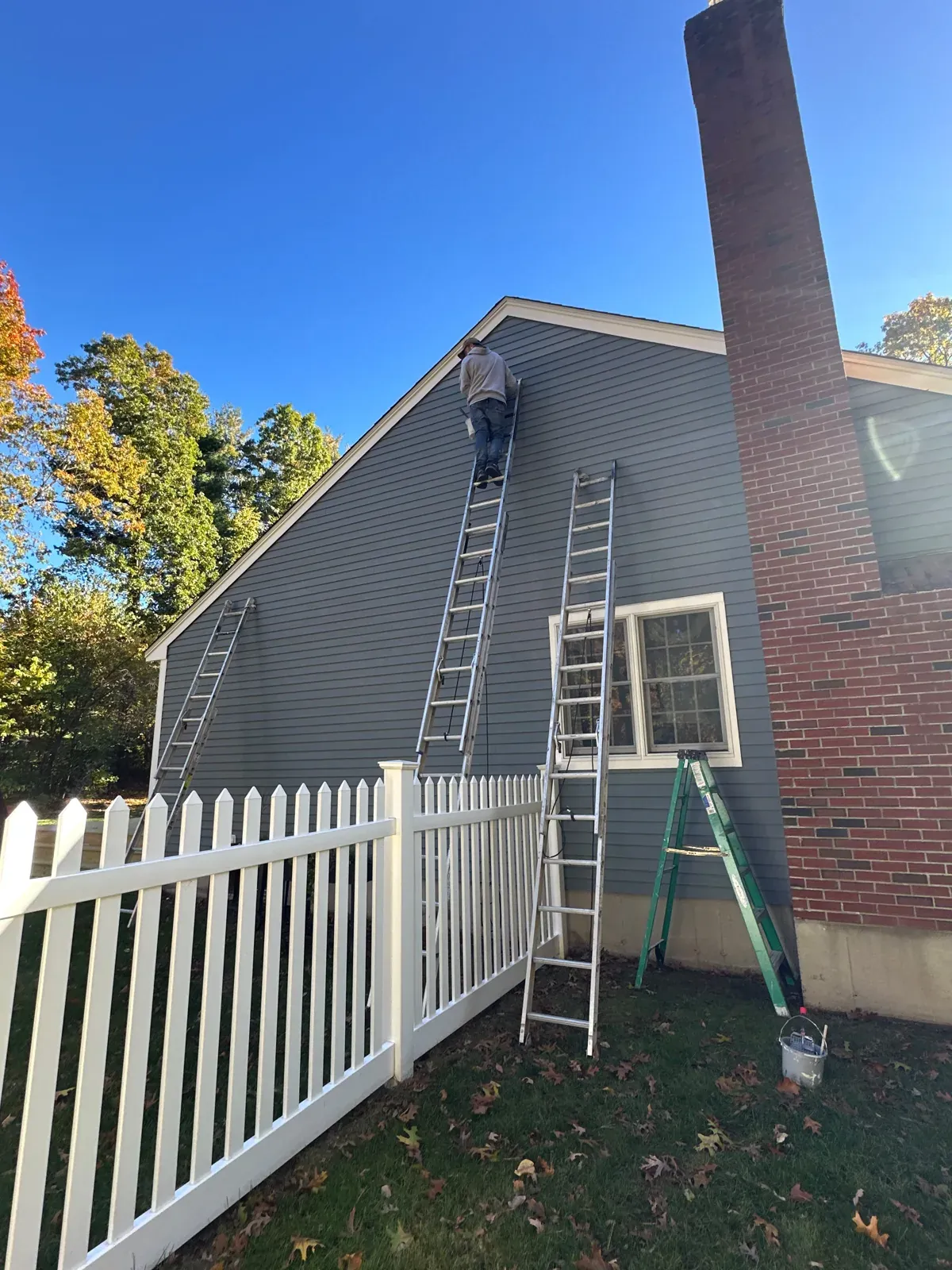
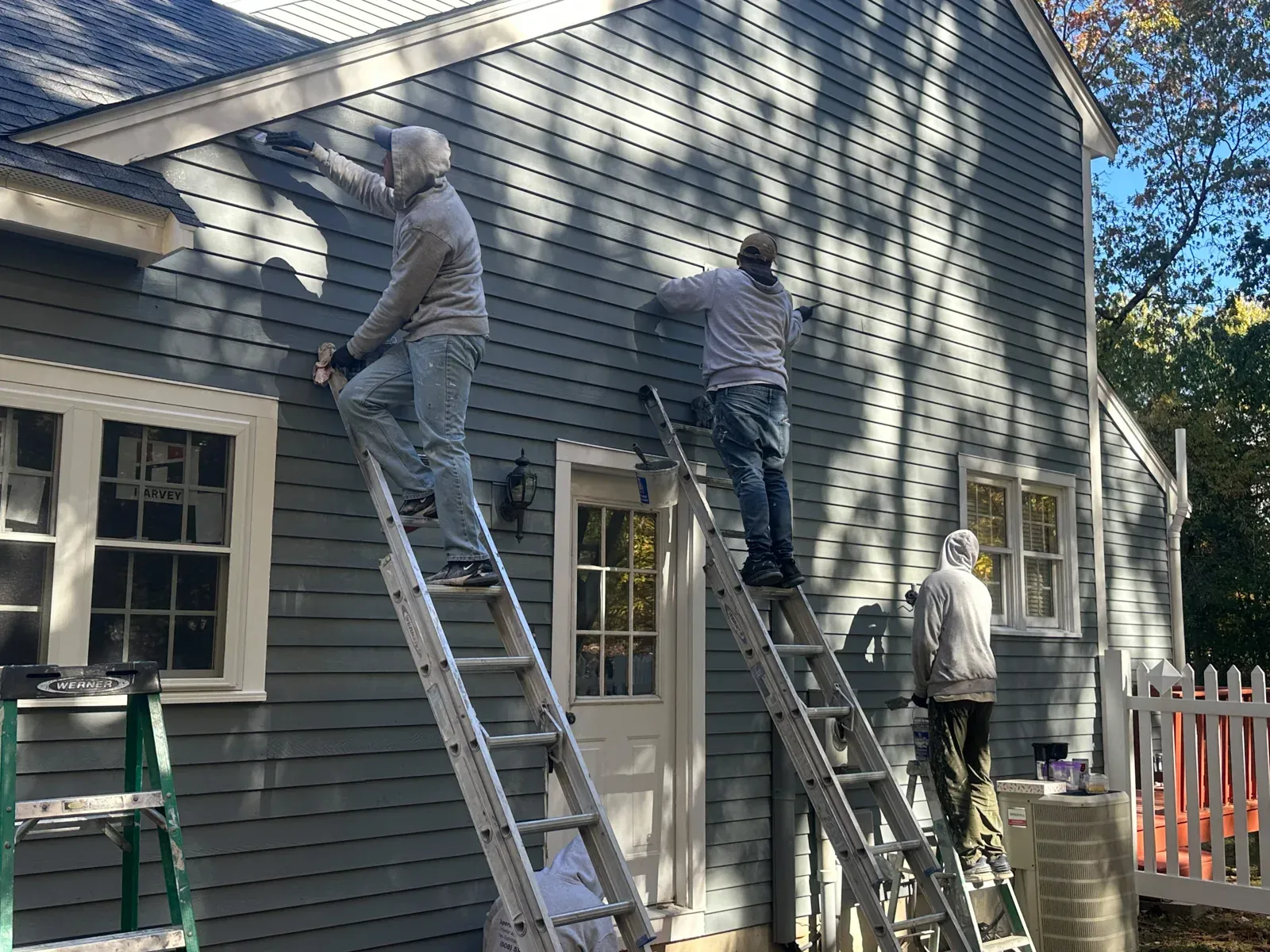
Preparation does most of the work. Washing off salt and mildew, scraping loose paint, replacing rotted trim, priming bare wood and caulking open joints all come before color. Ask how lead-safe prep will be handled if the house was built before 1978. Our exterior painting service starts with this prep.
How do you build a deck that lasts near the ocean?
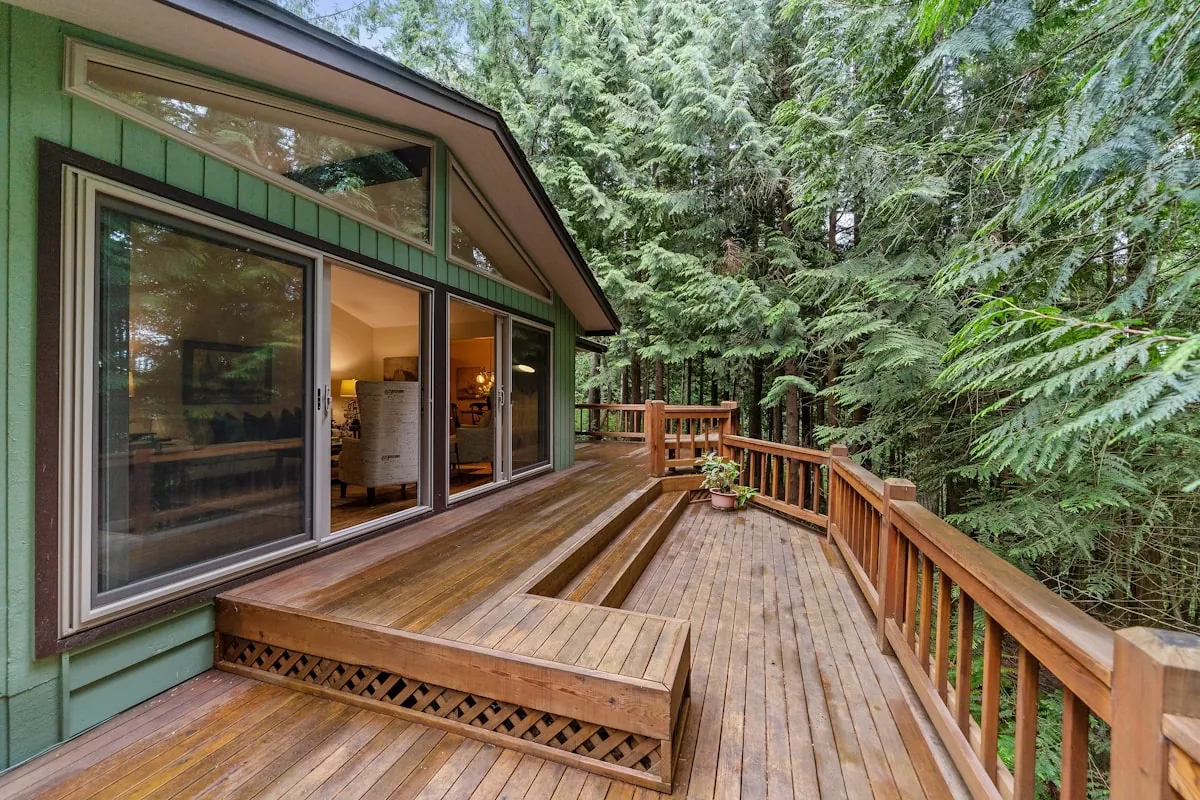
The hidden parts of a deck fail first near salt water. Joist hangers, bolts, screws and connectors should be hot dip galvanized or stainless steel, and many builders choose stainless closer to the shoreline. Treated lumber is also corrosive to plain steel, so connectors should be rated for the wood being used.
For decking boards, pressure treated lumber costs less up front but needs regular cleaning and sealing in salt air. Composite and PVC boards resist rot and splinters and need less upkeep, though they still need washing and proper spacing so water drains and air moves underneath.
The ledger, where the deck attaches to the house, deserves the most care. It needs proper flashing so water does not get behind the board and rot the rim of the house. Railings take a lot of wind and should be fastened to stay solid for years, not just on day one.
Flashing, gutters and trim: where water gets in
Most exterior damage starts at the edges, not the middle of a wall. Flashing above windows and doors, at roof to wall joints and around the deck ledger steers water away. When it is missing, bent or covered over by old repairs, wind-driven rain finds the opening.
Gutters matter more than people think. Clogged or undersized gutters spill water against the siding and foundation, and ice can build up at the roof edge in winter. Downspouts should carry water away from the house.
Trim boards, sills and the bottom edge of the siding are the first wood to soften. Replacing rotted trim with rot resistant material such as PVC or properly primed wood, and sealing the joints, is often the cheapest way to protect the rest of the exterior.
Do you need a permit, and does a flood zone change the rules?
Many exterior projects need a building permit from Quincy's building department (Inspectional Services) under the Massachusetts State Building Code (780 CMR). Decks almost always do, and siding or structural repairs often do. Any electrical work, such as deck lighting or exterior outlets, must be done and permitted by a state licensed electrician.
Some low lying parts of Quincy fall inside FEMA flood zones. If your home is in one, the rules for repairs, additions and larger renovations can be different. Check the flood map and confirm with the city before you finalize plans.
Homes built before 1978 may have lead in the exterior paint. EPA renovation rules and Massachusetts lead law require lead-safe work practices when that paint is scraped or sanded.
What does exterior renovation cost in Quincy?
As a rough guide, national cost guides such as Angi, HomeAdvisor and Remodeling magazine's Cost vs. Value report show wide ranges for exterior work, and Boston-area projects often run above national averages. Painting a typical single family exterior often lands somewhere in the several thousand to over ten thousand dollar range, depending on size, height and prep.
Decks are often priced per square foot. Pressure treated decks typically cost less than composite or PVC, and coastal details like stainless hardware add to the total. Siding replacement varies most with material: vinyl usually costs the least, with fiber cement and cedar shingles typically higher.
These are market ranges, not quotes. Rot found behind old siding, access on a tall or tight lot and permit requirements all move the price. Santos Home Renovation has 8 years of experience and more than 500 projects behind it, and serves Quincy in English, Portuguese and Spanish. See our Quincy home renovation page, or Get a Free Estimate.