Vinyl siding is one of the most common exterior upgrades in Massachusetts, and for good reason. It does not need painting, it handles rain and snow well, and it can make a tired house look new in a few weeks. The hard part is figuring out what it will actually cost before anyone climbs a ladder.
This guide explains how contractors price vinyl siding, what typically drives the total up or down, how long the job takes, and what permits and older-home issues to expect in towns around Boston and Worcester. The numbers here are rough market ranges, not quotes, so use them to plan and then get a real number from an in-home estimate.
How is vinyl siding priced?
Siding is usually measured in squares. One square equals 100 square feet of wall area, so a house with 2,000 square feet of exterior wall needs about 20 squares, plus extra for waste, cuts and trim. When you see a price per square, divide by 100 to get the price per square foot.
As a rough market guide, installed vinyl siding typically lands somewhere around $4 to $12 per square foot, depending on the product and the job. That works out to roughly $400 to $1,200 per square installed. For current national figures, compare cost guides such as Angi, HomeAdvisor and Remodeling magazine's Cost vs. Value report.
For a whole house, many homeowners see totals from about $10,000 to $25,000, and large or complicated homes can go well past that. Boston-area and Massachusetts costs often run above national averages because of labor rates, older homes and tighter working space.
What drives the cost up or down?
Tear-off is the first big factor. Removing old vinyl, aluminum or wood clapboard takes labor and dumpster fees, but it also lets the crew see and fix rotted sheathing before new siding goes on. Covering over old siding can look cheaper, yet it can hide problems and is not always allowed or recommended.
The product itself matters. Thicker premium panels cost more than builder-grade vinyl, and insulated vinyl, which has a foam backing, typically costs more again while adding some energy and impact benefits. House wrap or a weather-resistive barrier under the siding is a standard part of a good job and should be in the estimate.
Trim and details add up quickly. Corner posts, J-channel, window and door surrounds, soffit, fascia and gable vents all take time to cut and fit. A simple box-shaped ranch costs less per square than a house with dormers, bay windows and many corners.
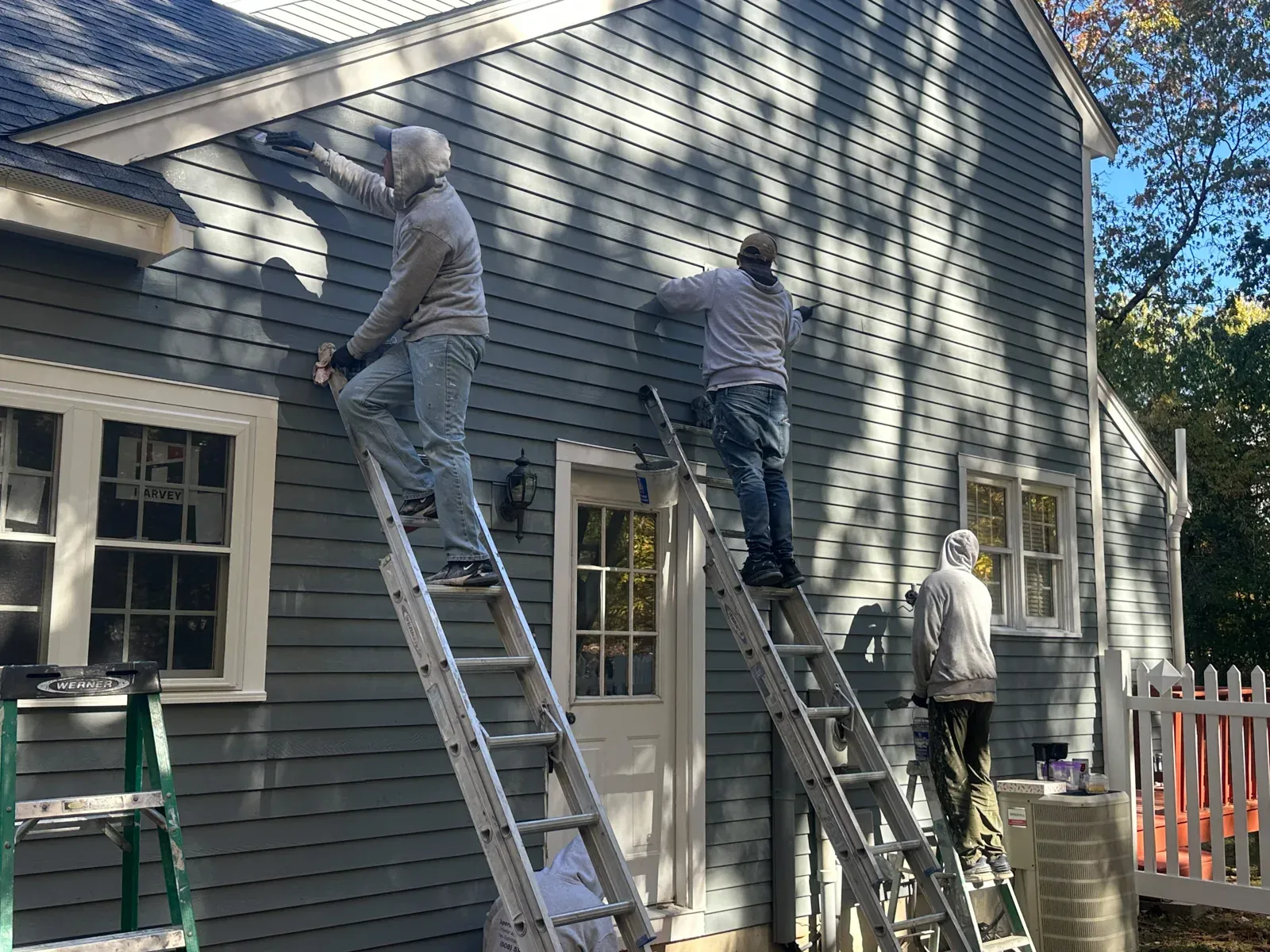
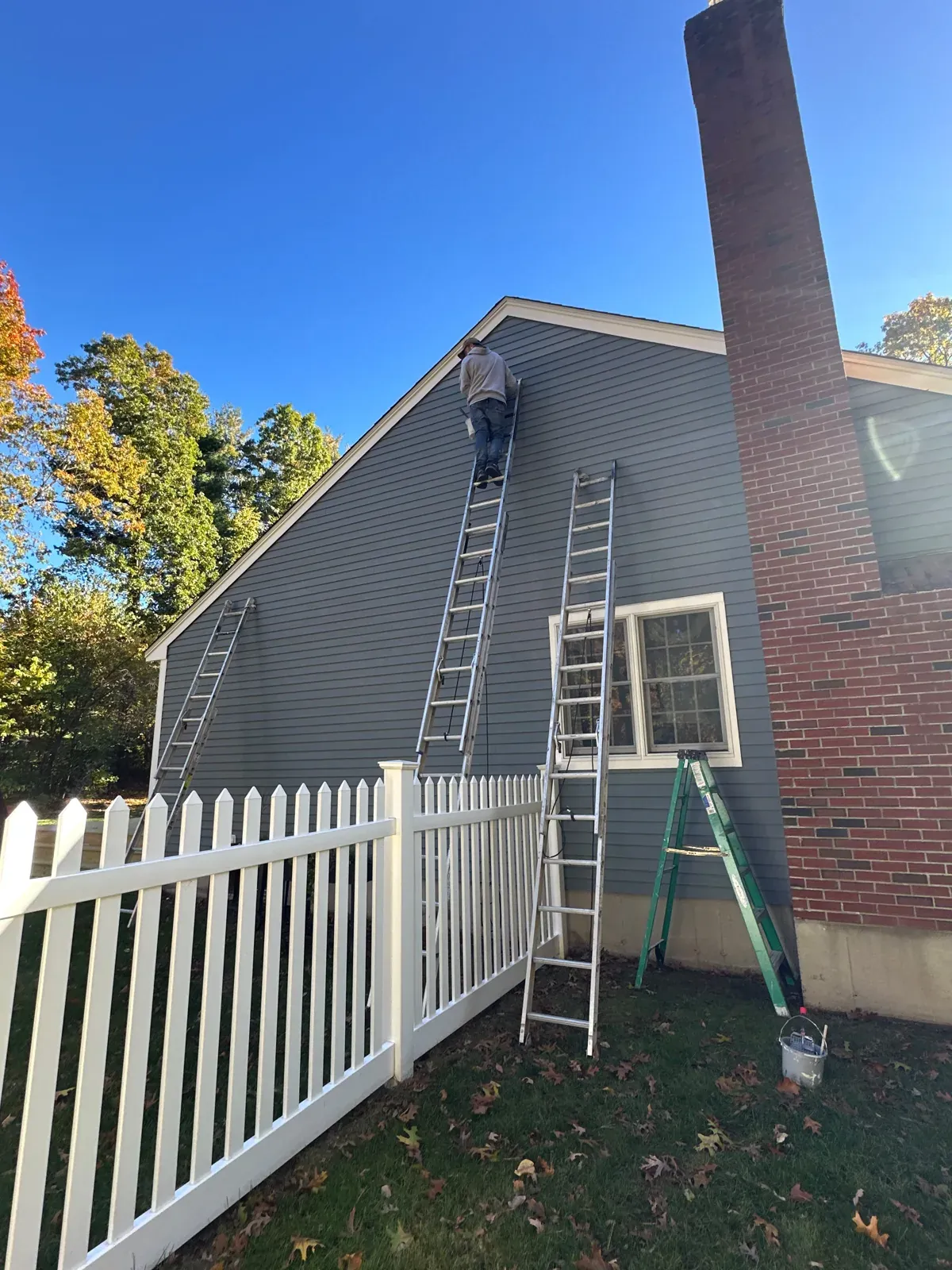
Height is the last big one. A two-story colonial can often be done from ladders and pump jacks, but a three-story triple-decker usually needs staging or a lift, which adds equipment cost and setup time.
Vinyl vs. fiber cement vs. wood clapboard in New England
Vinyl is typically the most budget-friendly of the three and needs the least upkeep. It will not rot, and a rinse once a year keeps it clean. Its weak points are that it can crack in a hard impact on a very cold day, and darker colors can fade or warp near strong reflected sunlight.
Fiber cement usually costs more to buy and install, and it needs paint every so often. In exchange it looks closer to painted wood, resists fire well and feels more solid.
Wood clapboard is the traditional New England choice and is often required or preferred in historic districts. It looks right on older homes but needs the most maintenance, including regular scraping and painting to stand up to freeze-thaw cycles and humidity.
Permits, historic districts and lead paint
In Massachusetts, building permits come from the local city or town building department under the Massachusetts State Building Code (780 CMR). Many towns require a permit to re-side a house, especially when old siding is removed, but rules vary, so check with your building department or ask your contractor how permits will be handled.
If your home sits in a local historic district, such as some neighborhoods in Boston and Cambridge, a historic commission may need to review the material and color before work starts. In some districts vinyl is limited or not allowed at all, so ask early.
Homes built before 1978 may have lead paint on the old clapboards and trim. Federal EPA renovation rules and Massachusetts lead law require lead-safe work practices when that paint is disturbed. Ask any contractor how they handle containment, cleanup and disposal before you sign.
How long does a vinyl siding job take?
For a typical single-family house, the work on site usually takes about one to two weeks once materials arrive. A small ranch can be faster, while a triple-decker with staging, lots of trim or rot repair can take longer.
Weather affects the schedule. Crews can install vinyl in cool weather, but very cold days make panels more brittle, and heavy rain or snow can pause work. Planning the job for spring through fall is usually easier in Massachusetts.
Repair or replace, and DIY or hire a pro?
If only a few panels are cracked, loose or damaged by a storm, a repair is often the smarter move. The catch is matching the color, since older vinyl fades, so a patch may stand out a little. Replacement starts to make sense when siding is widely faded, warped or brittle, or when you find soft, rotted sheathing underneath.
Replacing a panel or two is a reasonable DIY job for a handy homeowner with the right zip tool. A full re-side is different: it involves working at height, managing house wrap and flashing around windows, and getting expansion gaps right so panels do not buckle in summer heat.
How to choose a siding contractor
Ask for a written scope and estimate that lists tear-off, house wrap, the siding product, trim, soffit and cleanup. Compare estimates line by line, not just by the bottom number.
Look at photos of real past siding work, and ask who will be on site each day. Get a clear timeline and payment schedule, and confirm who handles the permit and any related window or trim work.
Good communication and a clean site at the end of each day matter as much as the price. If you are in Boston, Worcester or nearby towns like Quincy and Lowell, Santos Home Renovation can visit, look at your house and give you a free estimate. Get a Free Estimate to see what your siding project will really cost.