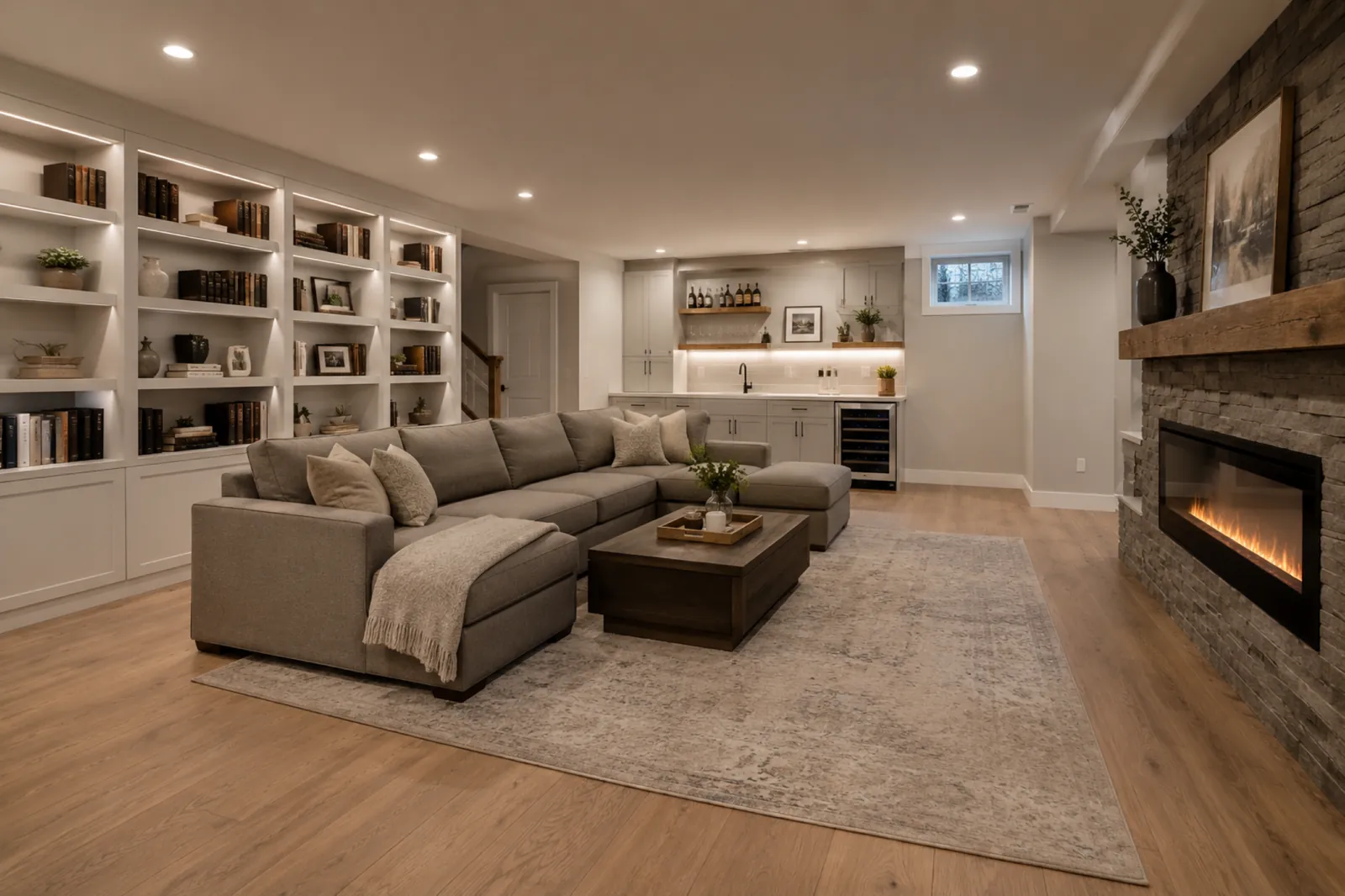
A finished basement is one of the most practical ways to add living space without building an addition. In many Massachusetts homes, the square footage is already there, sitting under the house with a concrete floor and bare foundation walls.
The hard part is knowing what it will cost. Basement finishing cost depends less on the size of the room and more on what is hiding behind the walls: water, old wiring, low ductwork and the condition of the foundation.
This guide walks through typical price ranges, what drives them, how long the work takes and how to choose among basement finishing contractors, with a focus on the older homes common around Boston and Worcester.
How much does it cost to finish a basement in Massachusetts?
As a rough guide, national cost guides such as Angi, HomeAdvisor and Remodeling magazine's Cost vs. Value report show basement finishing priced per square foot, with wide ranges depending on finish level. Boston-area and Massachusetts costs often run above national averages because labor, materials and permit fees are higher here.
In many cases, a straightforward finish (framing, insulation, drywall, basic lighting and flooring) lands somewhere around $40 to $75 per square foot in this region. Projects with a bathroom, a wet bar, custom built-ins or upgraded finishes can typically run $80 to $120 per square foot or more.
For a 700 square foot basement, that can mean anywhere from roughly $30,000 for a simple open room to well over $80,000 for a full living suite. These are market ranges, not quotes. The only way to get a real number for your house is a free in-home estimate from a contractor who has seen the space.
Why moisture comes first in New England basements
Many homes in Framingham, Marlborough and the surrounding towns sit on fieldstone foundations or older poured concrete. Fieldstone walls breathe and seep, and even poured foundations can take on water during spring thaw, heavy rain or when gutters dump water next to the house.
Before any framing goes up, the space should be checked for water stains, efflorescence (white mineral deposits), musty smells and dampness at the base of the walls. Fixes can range from regrading soil and extending downspouts to adding a sump pump, an interior drainage system or a dedicated dehumidifier.
Skipping this step is the most expensive mistake you can make. Finishing over a damp wall traps moisture behind drywall and insulation, which leads to mold and ruined floors. Most homeowners are better off budgeting for water management first and finishes second.
What drives basement finishing cost up or down
Framing and insulation are the backbone of the job. Below-grade walls usually call for moisture-tolerant insulation, such as rigid foam board against the concrete, before the stud wall and drywall go in. Using moisture-resistant drywall near the floor is common practice too.
Ceiling height matters more than people expect. Building code generally requires around 7 feet of clear height for habitable basement space, with some allowance under beams and ducts. Low ceilings, ductwork, pipes and a main beam can mean soffits, a drop ceiling or rerouting, and each option changes the price.
Adding a bathroom is one of the biggest jumps in cost. If there is no drain below the floor level, you may need to break concrete for new plumbing or install an upflush system. Plumbing and gas work in Massachusetts must be done by a state-licensed plumber, and electrical work by a state-licensed electrician.
A bedroom also brings code requirements. Any basement sleeping room needs an emergency escape opening, usually an egress window with a window well, sized to code. Cutting a foundation wall for an egress window is a significant line item on its own.
Choosing flooring and finishes for below-grade space
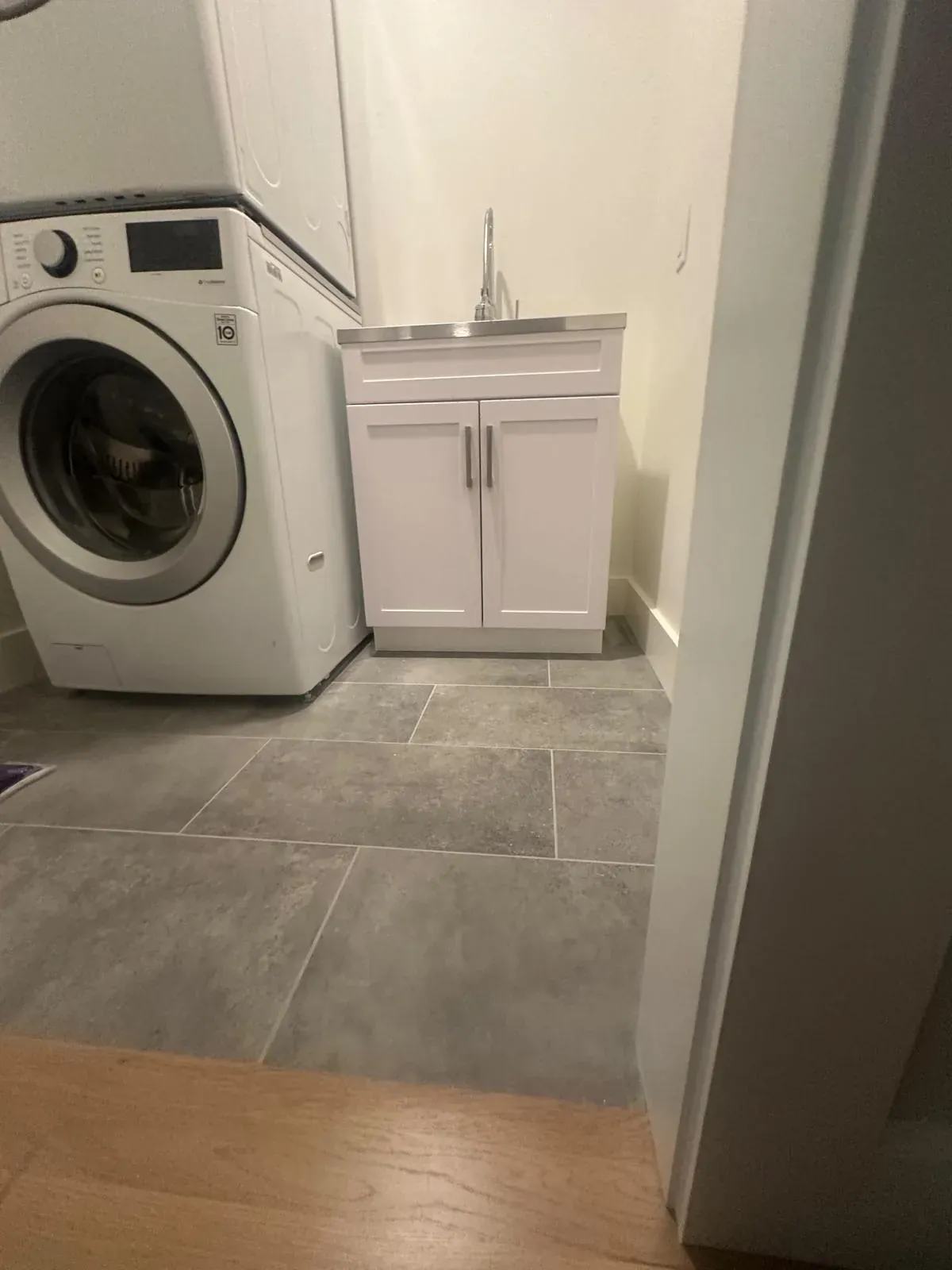
Flooring below grade has to handle humidity and the occasional bit of water. Luxury vinyl plank (LVP) is a popular choice because it is waterproof, warm underfoot and comfortable for family rooms. Porcelain tile is another solid option, especially for bathrooms, laundry areas and entry zones.
Solid hardwood is generally a poor fit for basements, since it can cup and warp as moisture changes through the seasons. Carpet works in some dry basements but holds onto dampness if a leak ever happens. Many homeowners pick LVP for living areas and tile for wet rooms.
Permits and timeline for finishing a basement in Massachusetts
Finishing a basement usually requires a building permit from your local city or town building department under the Massachusetts State Building Code (780 CMR). Electrical and plumbing work need their own permits, pulled by licensed electricians and plumbers. Requirements vary by town, so check with your building department early.
If your home was built before 1978, painted surfaces may contain lead. Federal EPA renovation rules and Massachusetts lead law require lead-safe work practices when that paint is disturbed, so ask any contractor how they handle it.
Once permits are in place, a typical basement finish takes about 4 to 8 weeks of work. A larger project with a bathroom, egress window or drainage work can take 8 to 12 weeks or more, and inspections between stages add time. Planning in the fall or winter often lines up nicely, since basements are indoor work.
DIY or hire a pro, and how to choose a contractor
Handy homeowners sometimes take on painting or flooring themselves to save money. Moisture control, framing to code, egress windows, electrical and plumbing are a different story: mistakes there are costly to fix, can fail inspection and can affect resale. Licensed trades are required for electrical and plumbing work in any case.
When comparing basement finishing contractors, ask for a written scope and estimate that lists what is and is not included. Look at photos of real past work, ask for a clear timeline and payment schedule, and find out who handles permits and the licensed trades.
Communication and cleanup matter too. Ask how often you will get updates and how the site will be left each day, especially when the basement holds your laundry or storage.
If you are in Boston, Worcester or nearby towns, Santos Home Renovation can visit, look at the space and give you a free estimate. Luann comes to the house himself, and one crew handles the whole job from framing to the final coat of paint. Get a Free Estimate to find out what your basement will actually cost.