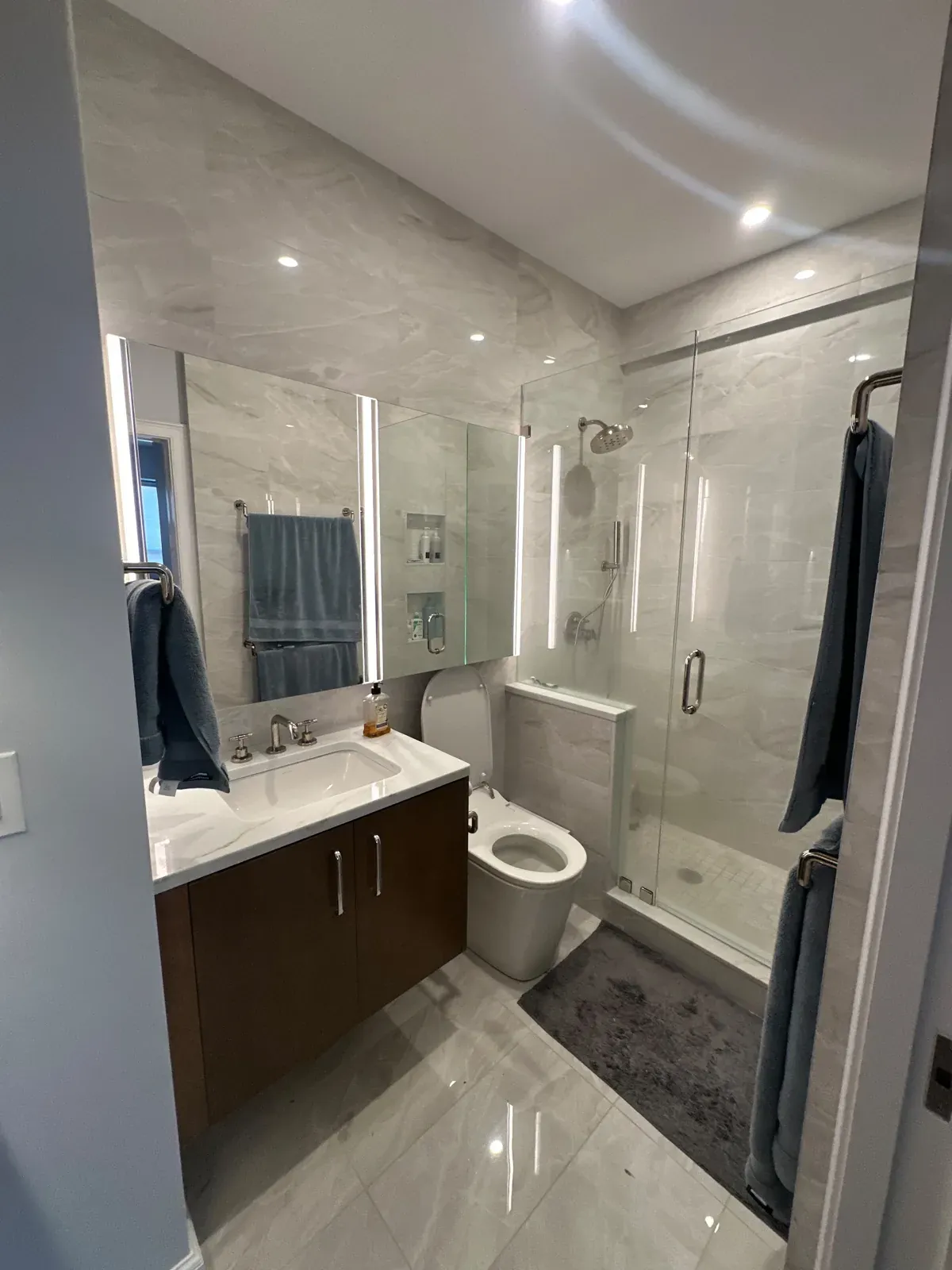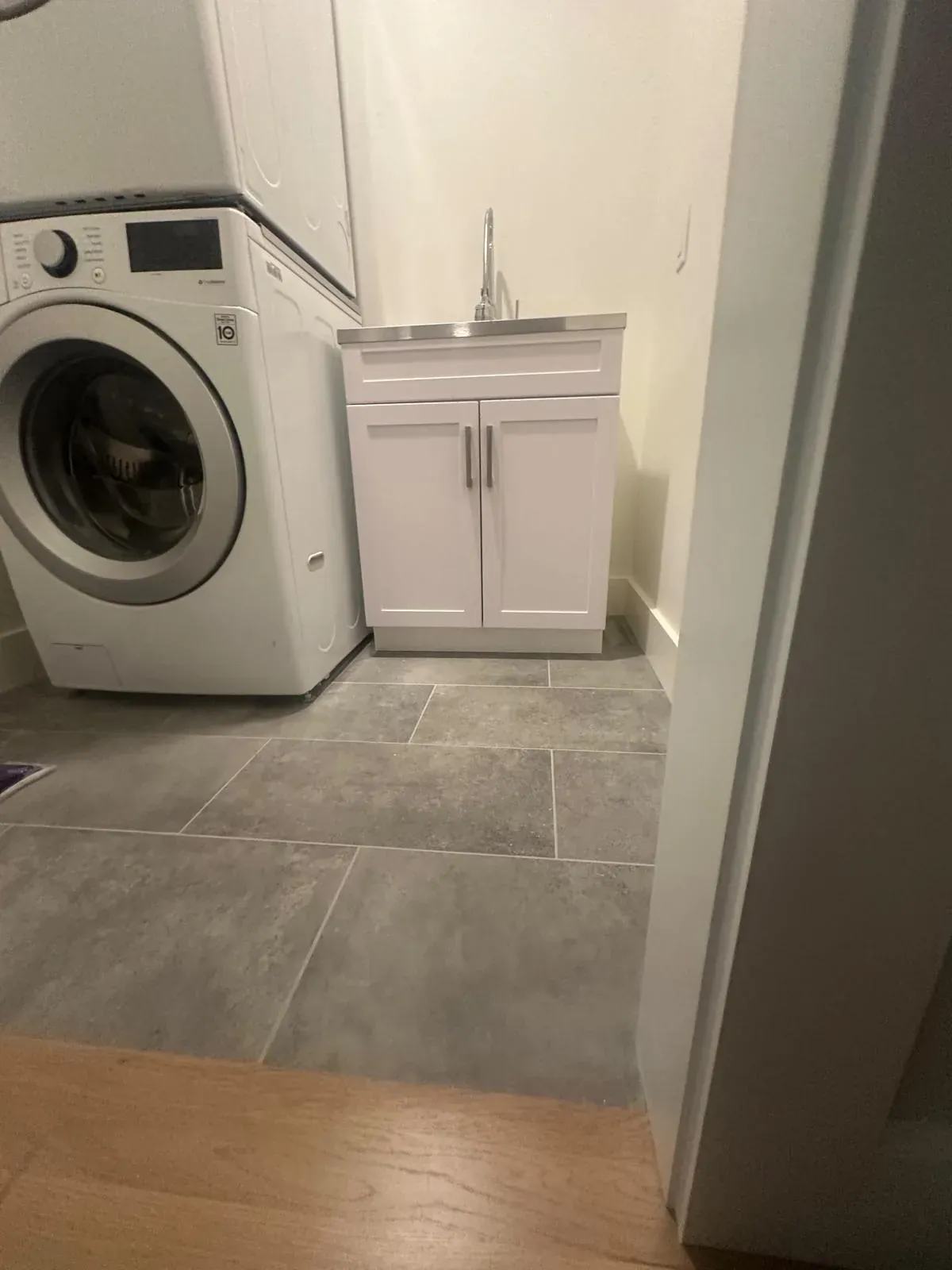
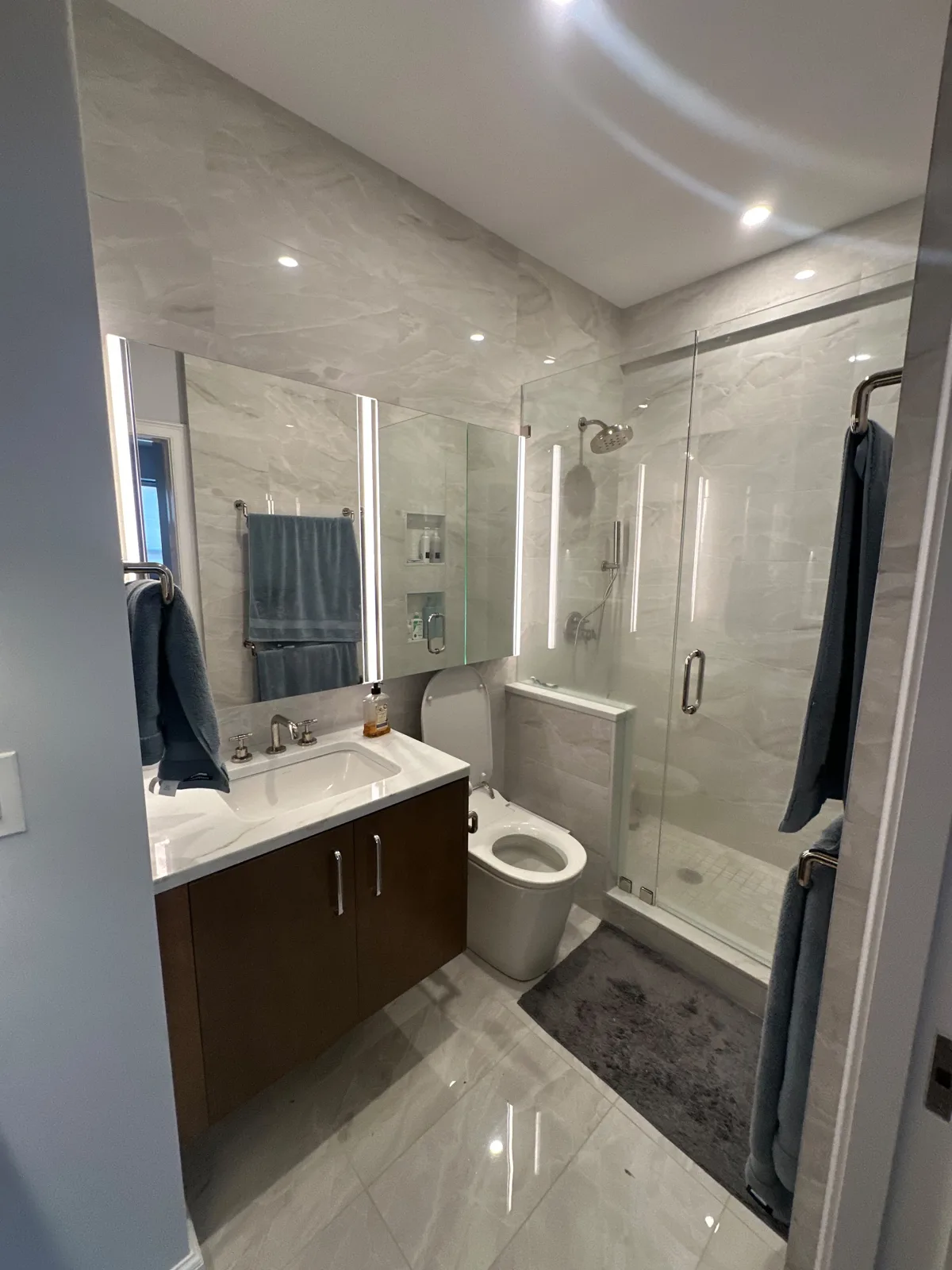
How much does a bathroom remodel cost in Massachusetts? The honest answer is that it depends on how far you go. Swapping a vanity and repainting is a very different job from tearing a room down to the studs and moving the plumbing.
This guide walks through typical market ranges for three levels of work, the choices that change the total, how long the job usually takes and what permits are involved. Use it as a starting point, then get a real number from a contractor who has seen your bathroom.
Typical bathroom remodel cost ranges in 2026
National cost guides such as Angi, HomeAdvisor and Remodeling magazine's Cost vs. Value report track remodeling prices every year. As a rough guide, most bathroom projects fall into three tiers, and Boston-area and Massachusetts costs often run above national averages because labor, materials and permits cost more here.
A cosmetic refresh (new vanity, faucet, toilet, mirror, lighting fixtures and paint, with the tub and layout staying put) typically runs from about $8,000 to $15,000 in many parts of the state. A mid-range remodel that adds new tile floors, a new tub or shower surround and updated fixtures commonly lands from $15,000 to $35,000.
A full gut remodel, where the room is stripped to the studs and rebuilt with new plumbing rough-in, waterproofing, tile walls, custom glass and higher-end finishes, often starts around $35,000 and can go well past $75,000 for a large primary bathroom. These are market ranges, not quotes, and your project can fall outside them.
What drives the total up or down
Layout is the biggest lever. Keeping the toilet, sink and shower where they are saves real money, because moving drains and supply lines means opening floors and walls and bringing in more plumbing work. Relocating a toilet in an older home with cast iron drains can add thousands on its own.
Tile is the second lever. Large-format porcelain, natural stone and detailed patterns like herringbone take more labor per square foot than a simple layout with standard tile. A full tiled shower with a niche and a bench costs more than a prefabricated acrylic surround.
Fixtures and the vanity round it out. A stock vanity and a basic faucet cost a fraction of a custom double vanity with a quartz top. Frameless glass doors, thermostatic shower valves, heated floors and better ventilation all add up, but many of them improve how the room works every day.
Tub to walk-in shower conversions
Replacing an old tub with a walk-in shower is one of the most requested bathroom projects. It opens up the room, makes it easier to step in and out, and suits homeowners planning to stay in the house as they get older.
As a rough guide, a tub-to-shower conversion often runs from about $8,000 to $20,000 depending on the shower size, whether you choose a tiled or prefabricated base, and the type of glass. A curbless shower costs more because the floor usually has to be lowered or rebuilt to slope correctly.
One thing to think about: if it is the only bathroom with a tub in the house, removing it may matter to future buyers with young children. Many homeowners keep a tub in a second bathroom and convert the primary one.
Hidden water damage in older Massachusetts homes
Much of the housing in Boston, Worcester, Brockton and nearby towns is decades old: triple-deckers, colonials, capes and row houses with original plumbing and plaster walls. When a bathroom in one of these homes is opened up, it is common to find rotted subfloor, soft joists under the toilet or old leaks behind the tub.
Massachusetts winters add to the problem. Bathroom exhaust that vents into the attic instead of outside, poor insulation on exterior walls and humidity trapped during cold months can lead to mold and moisture damage over time. Freeze and thaw cycles can also stress pipes running through outside walls.
A smart budget sets aside a contingency of roughly 10 to 20 percent for surprises like these. A good contractor will explain what they found, show you photos and give you a written change order before doing extra work.
Permits and how long a bathroom remodel takes
In Massachusetts, building permits come from your local city or town building department under the Massachusetts State Building Code (780 CMR). Layout changes, structural work and removing walls generally need a permit. Plumbing and gas work must be done and permitted by a state-licensed plumber, and electrical work by a state-licensed electrician. Requirements vary by town, and historic districts in places like Boston and Cambridge can add review.
If your home was built before 1978, it may contain lead paint. Federal EPA renovation rules and Massachusetts lead law require lead-safe work practices when painted surfaces are disturbed, so ask any contractor how they handle it.
A cosmetic refresh often takes one to two weeks. A mid-range remodel commonly takes three to five weeks, and a full gut can take six to ten weeks once you count permits, inspections and special-order items like custom glass or vanities.
DIY or hire a pro?
Painting, swapping a mirror or replacing a light fixture with the same type are reasonable weekend jobs for a handy homeowner. Tile work, waterproofing and anything involving drains, supply lines or wiring are a different story.
Waterproofing mistakes in a shower usually do not show up for months, and by then the damage is inside the wall or ceiling below. Plumbing and electrical work also has to be done by licensed trades under Massachusetts rules, so most of the real work in a remodel is not a DIY job.
How to choose a bathroom remodeling contractor
Ask for a written scope and estimate that lists what is included, from demolition and disposal to tile, fixtures and paint. Look at photos of real past bathrooms, not stock images, and ask for a clear timeline and payment schedule tied to stages of the work.
Find out who handles permits and who brings in the licensed plumber and electrician. Ask how they will communicate during the job, how they protect the rest of the house and how they handle cleanup each day. A contractor who answers these questions clearly is usually one who runs an organized job.
If you are in Boston, Worcester or nearby towns, Santos Home Renovation can visit, look at the space and give you a free estimate. Luann comes to the house himself, one crew handles the whole job, and you can talk in English, Spanish or Portuguese. Get a Free Estimate and find out what your bathroom will really cost.